
The Secret to Profitable Properties: A Complete Guide to Money Management in Property Management
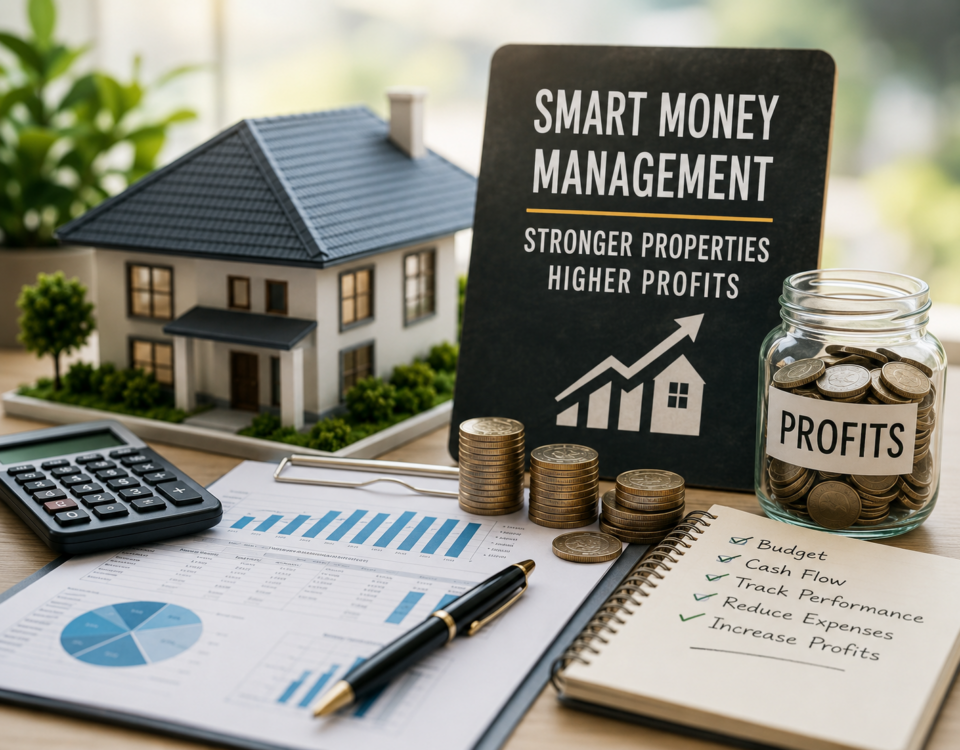
Money Management in Property Management: 7 Smart Strategies to Maximize Profits and Minimize Stress
Property management entails much more than collecting rent and maintaining property.
Behind every property that is successfully run is a core foundation of effective money
management in property management. As either a single rental unit or running a large
property portfolio, financial planning and controlling funds are critical in maximising your
returns, managing risk and ensuring the property will continue to operate at the same level of
performance in the future through effective real estate financial management.
With increasing maintenance costs, erratic occupancy levels and greater tenant
expectations, Property Managers should deal with finances smarter than ever to remain
competitive. Here is how effective money management can improve the way you manage
and operate properties while increasing rental property profits.
Understanding Money Management in Property Management
Property management includes managing finances by planning, monitoring and controlling
all income and expense activities for a piece of Real Estate. The intent is for the owner to
use as much rental income as possible without creating situations where they do not have
enough reserves for necessary repairs, emergencies, and/or future investment into the
property.
Many owners face problems with spending too much money, inadequate budgeting and
irregular cash flow. Having a structured financial strategy supported by property
management financial management and financial planning for rental properties will
help eliminate those issues as well as increase overall property performance.
Managing Revenue Streams Effectively
In most cases, rental income is the main revenue source for a majority of properties.
However, there are other ways that you can generate more revenue from your property,
which will positively impact your profit margins. Examples of these additional income
streams could be: management fees, lease renewals, parking fees, maintenance
coordination fees, other value-added services, etc.
Observing actual performance of your apartment complexes by utilizing financial data such
as collected rent and predictable recurring income (i.e., Monthly Recurring Revenue)
provides useful information regarding tenant management effectiveness and cash flow
management for property managers. Sustained high collection rates show efficient tenant
management and secure rental property cash flow.
Building a Realistic Budget
A properly prepared budget acts as a benchmark for profitability of all properties, and
property managers are to forecast their projected annual income, determine their operating
expenses estimates and budget for both expected and unexpected events.
● Routine Maintenance Expenses
● Utility/Service Expenses
● Marketing Expenses for the Property
● Insurance and Compliance Expenses
● Emergency Reserve Funds
For example, many professional Property Managers create special reserve funds for
unanticipated repairs, such as plumbing problems, electrical issues, or appliance repairs.
This ensures that disruption does not occur in the operation of the property. Effective
property management budgeting helps maintain stability during unexpected situations.
Mastering Cash Flow Management
Cash flow is the term used to describe how much cash comes into and goes out of your
property. If your property’s cash flow is positive, it means that you are bringing in more
money than you are spending. However, if your property’s cash flow is negative, then you
will run into challenges with your finances very quickly.
To keep cash flow working effectively, property managers should do the following things:
● Automate rent collection processes
● Monitor payment delays closely
● Reduce vacancy periods through proactive marketing
● Maintain reserve funds for emergencies
In addition, using methods to help identify your level of financial security may include using
the following types of financial indicators as a basis for evaluating your financial condition
and making sound investment decisions: Net Operating Income (NOI), Net Cash Flow,
Cash-on-Cash Returns, and Operating Cash Reserves. These property performance
metrics provide clarity and allow for a more accurate assessment of your current financial
condition.
Using Technology to Improve Financial Management
Property management software has become an integral part of managing properties in
today’s society, handling many administrative tasks associated with properties, including
bookkeeping, collecting rents, creating budgets, property management accounting, and
financial reporting.
Automated systems can provide:
● Online rent payment processing
● Instant generation of Financial Reports
● Real-Time Expense Tracking
● Occupancy/Revenue Trend Monitoring
Furthermore, property managers are now able to use AI-powered financial forecasting,
analytics, and predictive tools to help them understand future maintenance costs, determine
potential financial exposure, and improve their overall decision-making capabilities.
Tracking Financial Reports and Key Performance Indicators
Each property manager should keep track of:
1. Expenses and Income Reports
2. Cash Flow Records
3. Occupants’ Records
4. Rent Arrears Records
5. ROI Reports
Popular KPIs include:
1. Occupancy Rate
2. NOI
3. ROI
4. Delinquency Rate
5. Maintenance Cost Ratio
These property management financial reporting metrics help property managers analyze
trends, identify issues, and improve overall financial performance.
Conclusion
Managing money properly is key to successful property management. Effective budgeting,
managing cash flow, controlling expenses, adopting technology, and producing financial
statements helps yield more profit for property managers while reducing their financial risk.
As we move into an increasingly competitive real estate environment, property managers will
have an advantage if they are able to make financial decisions based on data, maximize
their return on investment, retain their tenants with high levels of satisfaction, and achieve
long-term sustainability. In addition to safeguarding your property investment, being
proactive about managing money through effective property investment management
gives you the opportunity for long-term success as well.