
The Ultimate Home Interior Guide: SmartDesign Ideas, Budget Planning & How toAvoid Interior Scams
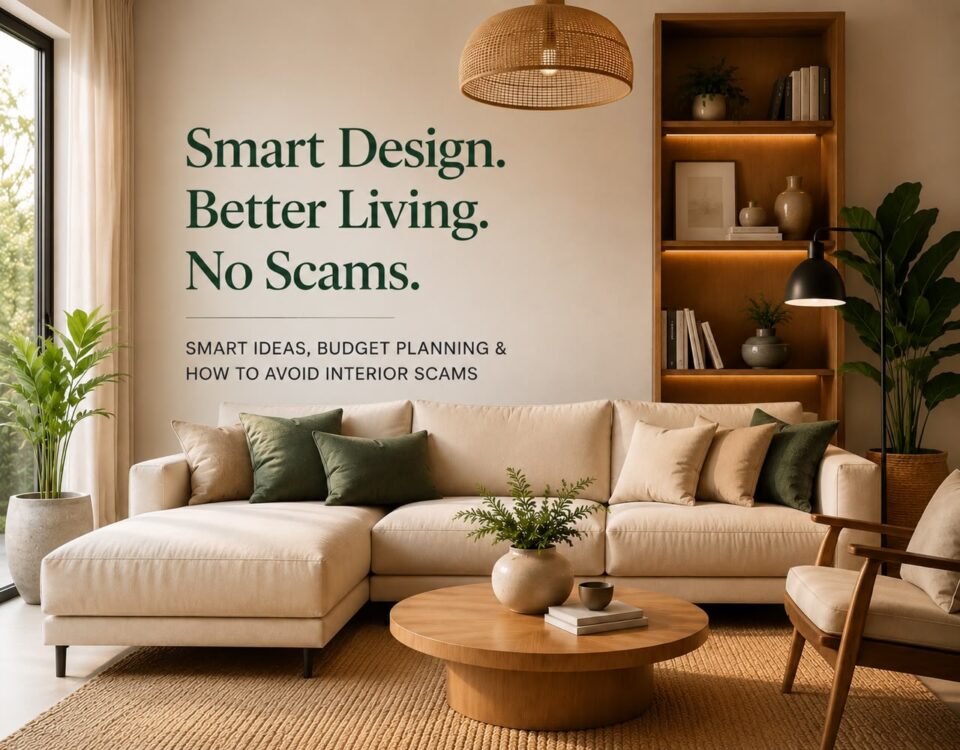
Designing Your Dream Home? Here’s Everything You Need to Know Before You Start
Building a beautiful home is exciting. From choosing wall colours to selecting furniture and
lighting, every detail feels personal. But when it comes to home interior design, many
homeowners end up confused, overwhelmed, or even cheated because they don’t know
where to begin.
The interior industry has changed rapidly in recent years. Today, there are smart homes,
modular kitchens, automated lighting systems, and endless design inspirations online. At the
same time, there are also hidden charges, duplicate plywood materials, low-quality fittings,
and fake promises from inexperienced contractors.
That’s why planning your home interiors properly is more important than ever.
Whether you are renovating your house, decorating a new apartment, or planning luxury
interiors on a budget, this complete guide will help you understand how to design your home
smartly, manage your interior budget, choose the right professionals, and avoid common
interior market scams.
Start With a Realistic Interior Budget
One of the biggest mistakes homeowners make is focusing only on design inspiration
without calculating the actual cost of interiors.
Before selecting Pinterest-inspired kitchens or luxury wardrobes, decide how much you are
comfortable spending. A smart interior budget planning strategy can prevent unnecessary
stress later.
A practical way to divide your budget is the following:
● 35%–40% for modular kitchen and wardrobes
● 20% for furniture and storage
● 15% for electrical work and lighting
● 10% for false ceiling and painting
● Remaining amount for décor, curtains, and emergency expenses
If your budget is limited, prioritise functionality first. Good storage, durable plywood, and
quality fittings matter more than expensive decorative panels.
Today, many homeowners are also using 3D home interior design software before starting
the project. These tools help visualise layouts, furniture placement, and colour combinations
in advance, reducing mistakes and saving money.
Modern Interior Technology Is Transforming Homes
The world of modern home interiors is changing fast. Earlier, interiors were mostly about
furniture and paint. Now, homeowners want homes that are smart, stylish, and
space-efficient.
Some popular trends in smart home interior design include:
● Modular kitchens with soft-close systems
● Motion sensor lighting
● Space-saving furniture
● Smart storage solutions
● Voice-controlled appliances
● Waterproof plywood technology
● Eco-friendly and sustainable interior materials
These technologies improve convenience and aesthetics, but they can also increase costs if
not planned wisely. Many companies market basic products as “premium smart interiors” and
charge excessively.
Understanding what you actually need versus what is simply a trend can help you make
better decisions.
Whom Should You Approach for Home Interiors?
Choosing the right people for your project is just as important as choosing the design itself.
You generally have three options for home interior services:
Interior Designers
Professional interior designers focus on layouts, aesthetics, color combinations, and
customised solutions. They are ideal for premium or personalised interiors.
Modular Interior Companies
These companies specialise in factory-made kitchens, wardrobes, and storage units. They
usually provide faster installation, warranties, and organised execution.
Local Contractors and Carpenters
A more budget-friendly option, but quality depends heavily on experience, supervision, and
material selection.
Before hiring anyone, always:
● Check previous projects
● Read customer reviews online
● Visit completed homes if possible
● Ask for a detailed quotation
● Confirm timelines and warranties
● Verify material brands clearly
Don’t trust social media photos alone. Many interior companies use edited images or copied
designs to attract customers.
Interior Market Scams Every Homeowner Should Know
The demand for home interior design services has increased massively, and
unfortunately, so have scams.
Many homeowners realize they were cheated only after the work is completed.
Here are some of the most common interior scams:
Duplicate Plywood and Materials
Some contractors charge for branded plywood but install cheaper local boards inside
cabinets where customers rarely check.
Hidden Costs
Low initial quotations often become expensive later due to additional charges for handles,
accessories, transport, GST, or labor.
Poor-Quality Hardware
Cheap hinges, channels, and fittings are used instead of branded products, reducing
durability.
Fake Waterproof Claims
Not all plywood is waterproof. Some sellers falsely market ordinary plywood as marine-grade
or BWP plywood.
Reduced Thickness
Customers are promised thicker plywood sheets but receive thinner materials to cut costs
secretly.
Always ask for invoices, warranty cards, and original packaging before installation begins
How to Check Original vs Duplicate Plywood
Plywood is the backbone of most interiors. Choosing the wrong material can damage your
furniture within a few years.
Here’s how you can identify original plywood:
Check for ISI certification
Branded plywood usually comes with an ISI mark that confirms quality standards.
Look for Brand Stamping
Most genuine plywood sheets have permanent company branding on the surface or edges.
Inspect the Layers
High-quality plywood has uniform layers without gaps or uneven thickness.
Ask for Test Reports
Trusted dealers can provide moisture resistance and quality certification reports.
Perform a Water Resistance Test
A small plywood sample can be tested in water to check durability and swelling.
Purchase From Authorized Dealers
Avoid suspiciously cheap prices. In the interior market, extremely low prices often indicate
duplicate materials.
For kitchens and moisture-prone areas, many experts recommend BWP plywood or marine
plywood because of its durability and water resistance.
Final Thoughts: A Smart Home Starts With Smart Decisions
Beautiful interiors are not just about luxury — they are about thoughtful planning, quality
materials, and choosing trustworthy professionals.
Take time to research before investing in your dream home. Learn basic material knowledge,
compare quotations carefully, and never hesitate to ask questions during the process.
A well-planned home interior design project not only improves comfort and aesthetics but
also increases the long-term value of your property.
The right interiors can make your home feel more organized, functional, and truly yours —
without overspending or falling into common market traps.